

This blog focuses on what a facelift feels like: from the experience of undergoing and waking up from anesthesia, to the initial groggy, sore state of early recovery, and finally the long-term feelings of numbness, tingling, and sensation normalization, patients can learn what others have experienced so they can plan ahead without fear or anxiety.
Planning Your Facelift
Choosing to undergo a facelift is an exciting decision: investing in yourself always pays off in more ways than one. A successful facelift can turn back the clock by ten years or more, but it can also boost your confidence and improve many aspects of your life.
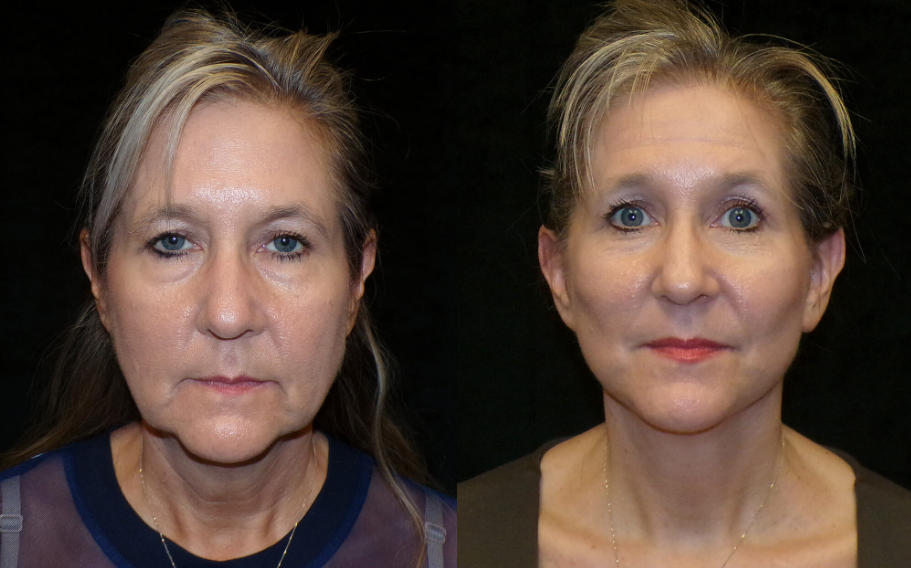
Dr. Francis Johns – Artisan Plastic Surgery, Facelift Before and After Case #4867
Each facelift type is different: from quick mini facelifts to the gold-standard traditional facelift and the most intensive option, the deep plane facelift, it’s important to choose the right one for your age, concerns, and goals. For more information on which facelift is right for you, check out our blog, “What Are the Different Types of Facelifts?”
But even with a procedure as beneficial as a facelift, patients want to know as much as they can about the entire process—especially the recovery and what they can expect from pain. Below, we’ll discuss in more detail how painful a facelift really is.
How Much Pain Can I Expect From a Facelift?
We’ll cut to the chase: facelifts are a lot less painful than you’re probably thinking. Of course, everyone has a different pain tolerance, and no two patients are the same in terms of healing, health status, and the level of revision needed, all of which may affect the recovery process and pain threshold. Overall, facelifts are more uncomfortable than explicitly painful. To help illustrate what we mean, we’ll detail what it feels like to undergo a facelift from start to finish.
What Does a Facelift Feel Like?
During Surgery: No Pain
Modern medicine has you covered: all facelifts (and almost all other cosmetic procedures) are performed under general anesthesia. General anesthesia is a medically induced, controlled state of total unconsciousness and insensitivity to pain. That means you are totally and completely asleep for the duration of your procedure. From start to finish, you’re in a dreamless state of unconsciousness, and you feel absolutely nothing—especially no pain. Patients often remark that it’s as if you blink and wake up from surgery; Most don’t even realize when they are put “under.”
Before your surgery, you will meet with your surgeon, who will check in with you and go over the plan once more, mostly to ensure you are comfortable and ready to go. Next, an anesthesiologist or certified registered nurse anesthetist will start an IV line in your arm. Before you know it, you’re asleep. Facelift surgery can take several hours, depending on the complexity of the procedure and whether you have combined procedures. Your anesthesia provider stays the entire time, monitoring your vitals and ensuring the correct amount of medication is administered.
Immediately After Surgery: Groggy but Still Painless
As you wake from anesthesia, you will be groggy, but won’t feel pain as the medication is still working in your system. It’s not uncommon to feel a little nauseated after general anesthesia. In the first few hours after surgery, you may stay in the recovery room at your surgeon’s surgery center so staff can monitor you.
Initial Recovery: Brief Discomfort
As the anesthesia wears off in the first few hours after surgery, or even into the first night at home, soreness is typically the first sign of discomfort. This is completely normal. Remember, you just went through major surgery! Your muscles, skin, tissues, and nerves were moved and manipulated, so feeling sore is natural.
Swelling will begin shortly after surgery and can cause significant discomfort throughout the process. We often tell patients that discomfort peaks around 24–48 hours after surgery: the sweet spot where your medication has worn off and the swelling is fresh. Your surgeon will likely prescribe pain medication specifically for this period, but more often than not, patients can get away with taking over-the-counter medication.
While not painful, fatigue is another expected postoperative symptom. Most patients are tired, feel fragile, sore, and a little discouraged at this point. This is all normal: bunker down in bed, put on your favorite show, and sleep it off. Most patients feel better around day three.
Long-Term Recovery: Numbness and Sensation Changes
After the initial discomfort, most patients say facelifts mostly just feel strange, not painful. Your nerves are working on making new connections, so numbness and tingling are common. The skin on your face and neck is very delicate at this time, so it’s important to be careful when washing your hair or touching your face—especially if you don’t have full sensation; you could accidentally hurt yourself.
Tightness and pressure are also very common, especially in early recovery. This is in part due to swelling pulling your skin tight—but you also just got the “skin tightening” procedure to remedy wrinkles, so that’s to be expected.
This will all settle down, but remember that everyone is different. It can take several weeks, even months, for numbness to resolve and normal sensation to return, so be patient and always check with your surgeon if anything feels or seems abnormal.
Fully Healed: No Pain, Natural Feel
Expect to feel 100% like yourself about a year after facelift surgery: this accounts for changes in sensation and numbness, as well as subtle nuances in healing and results. Swelling takes much longer to resolve than people expect, but you’ll see your final results well before the minor puffiness is fully gone.
After your facelift, expect to see yourself, but refreshed, vibrant, and more confident. Despite some minor discomfort and adjustment periods, the most common sentiment our facelift patients have is that they wish they’d done it sooner!
Want to Learn More About Facelifts in Pittsburgh, PA?
Dr. Francis Johns is Pittsburgh’s custom facelift expert, offering his outstanding surgical skills and compassionate bedside manner to make this an experience you’ll wish you’d started yesterday.
Call Dr. Johns and Artisan Plastic Surgery today at (724) 830-9305 or complete the contact form to schedule your personal facelift consultation and begin planning the cosmetic procedure of your dreams.